

The Carretera Austral by motorhome: route, stages and tips
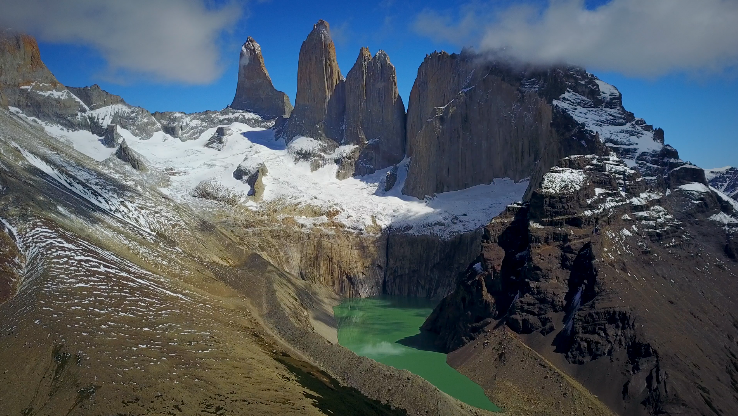
Traveling the Carretera Austral (Route 7) by motorhome is one of the road trips most dreamed of by people who visit or live in Chile. Its more than 1,240 kilometers between Puerto Montt and Villa O'Higgins cross fjords, evergreen forests, hanging glaciers and turquoise lakes.
The Route 7 has very particular geography and road conditions that you should weigh before booking a vehicle. Here is how the route works, its main stages, and what to check in each company's policy — including our specific case at The Rolling Home, where we do not rent our motorhomes for the Carretera Austral—.
What kind of road is it, and what policies do companies have?
The Carretera Austral combines paved sections (mainly between Puerto Montt, Coyhaique and Villa Cerro Castillo) with long stretches of loose gravel, corrugation, narrow climbs and ferry crossings, especially south of Aysén.
- The usual pattern in the market:There are local operators in the south (such as Puerto Montt or Puerto Varas) whose fleets are focused on Route 7, often with 4x4 vehicles or campervans prepared for heavy gravel, but with higher rates, high insurance deductibles or restrictions on certain sections.
- In the case of The Rolling Home: We do not rent our motorhomes to travel the Carretera Austral. Our vehicles (such as our low-profile models PaihuenANDLafken, equipped with a double bed, central heating, a full bathroom, a hot shower and a kitchen) are designed for maximum comfort and independence on paved roads and established destinations inside Chile (such as the Valparaíso Region, the Elqui Valley, the Atacama Desert, Araucanía or the Los Lagos Region as far as Puerto Montt and Chiloé). Also, as a company policy, we do not allow our vehicles to leave the country. By having you declare the planned route when you book (it is monitored by GPS), we look after the mechanical condition of our vehicles and make sure your trip inside Chile is safe and smooth.
Classic stages of the Carretera Austral (a reference for travelers)
If you are still planning Route 7 with a vehicle authorized for gravel, or from a base in northern Patagonia, the traditional route is usually split into these stages (ideally over 14 to 20 days):
Stage 1: Puerto Montt – Hornopirén – Chaitén (2 to 3 days)
- The route: It starts down the Reloncaví estuary (a ferry from Caleta La Arena to Caleta Puelche) to Hornopirén, where you take the ferry toward Caleta Gonzalo, the gateway to Pumalín National Park.
- Don't miss: Pichicolo hot springs, the alerce trails in Pumalín and Chaitén volcano.
Stage 2: Chaitén – Puyuhuapi – Queulat National Park (3 to 4 days)
- The route: Along Lake Yelcho and through Villa Santa Lucía and La Junta to Puyuhuapi.
- Don't miss: Lake Yelcho, the Puyuhuapi hot springs and the Hanging Glacier in Queulat National Park.
Stage 3: Queulat – Coyhaique – Villa Cerro Castillo (2 to 3 days)
- The route: After the winding Queulat pass, the road is paved again toward Coyhaique and continues to the Cerro Castillo massif.
- Don't miss: Resupply in Coyhaique and a hike to the Cerro Castillo lagoon.
Stage 4: Cerro Castillo – Puerto Río Tranquilo – Cochrane (3 to 4 days)
- The route: A long gravel section along General Carrera Lake and the Baker River.
- Don't miss: A boat trip to the Marble Caves at Puerto Río Tranquilo, and Patagonia National Park in Cochrane.
Stage 5: Cochrane – Caleta Tortel – Villa O'Higgins (3 to 4 days)
- The route: The southernmost section, through Caleta Tortel and a ferry from Puerto Yungay to Río Bravo, to the final kilometer at Villa O'Higgins.
- Don't miss: Cypress boardwalks in Tortel and a boat trip on Lake O'Higgins.
4 key tips before you choose a route and a motorhome
- Always check the routes allowed in the contract: Before you pay a deposit, ask explicitly whether the company allows the Carretera Austral, gravel roads or border crossings. Many insurance policies exclude damage on unpaved roads or off the declared route.
- Book ferries months ahead: If you travel in an authorized vehicle toward Chaitén or Caleta Gonzalo, the ferries have very few spaces for long, tall vehicles in the high season (November to March).
- Plan your times and distances carefully: On gravel the average speed drops to 30–50 km/h, so a short distance can take many hours.
- Consider comfortable alternatives on paved roads: If you want to travel in a roomy, comfortable, fully equipped motorhome, Chile has extraordinary paved routes north (Elqui Valley, Bahía Inglesa, San Pedro de Atacama) and through the lake district in the south (Pucón, Villarrica, Puerto Varas and Chiloé).